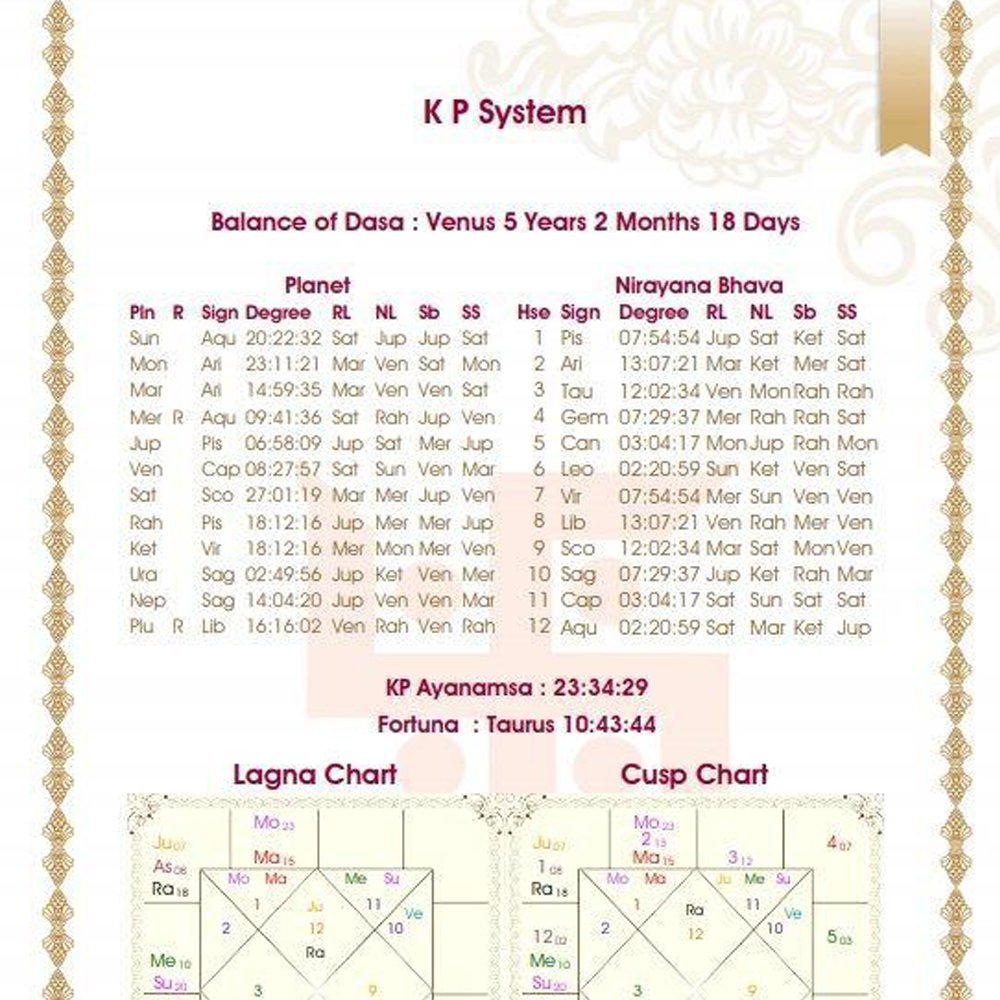
K.P. Astrology is an advanced predictive astrology course designed to provide students with a systematic and practical approach to accurate horoscope analysis. The course focuses on the principles of Krishnamurti Paddhati, Nakshatras, Sub-Lords, Cusps and event-based prediction techniques.
Introduction to K.P. Astrology
Students are introduced to the basic principles and predictive approach of Krishnamurti Paddhati. The course explains how K.P. Astrology differs from traditional methods and how its systematic techniques are applied to horoscope analysis.
Planets, Signs & Nakshatras
This section covers the role of planets, zodiac signs and Nakshatras in K.P. Astrology. Students learn how planetary positions and star lord connections influence the results shown in a horoscope.
Cusps & Sub-Lords
Students learn the importance of house cusps, Nakshatra Lords and Sub-Lords in K.P. Astrology. Special focus is given to analysing Sub-Lords to determine the actual promise and results of different houses.
Significators & House Results
The course explains the concept of significators and their importance in event prediction. Students learn how to identify relevant houses and connect planetary significations with specific life events.
Ruling Planets & Event Timing
Students learn the role of Ruling Planets and their application in horoscope analysis. The course also introduces practical techniques for determining the timing of events through Dasha, Bhukti and planetary transits.
Practical K.P. Horoscope Analysis
Real horoscope examples and practical case studies are used to develop confidence in K.P. prediction. Students practice analysing important areas such as career, marriage, education, finance and other significant life events.
Course Outcome
After completing the course, students will have a strong practical understanding of K.P. Astrology and will be able to analyse cusps, Sub-Lords and significators, identify relevant houses and apply systematic techniques for accurate horoscope and event-based prediction.
The Indian Institute of Vedic Astrology, Chandigarh (IIVA) was born out of a deep commitment to preserve, teach and propagate the timeless knowledge of Vedic Astrology in a systematic and meaningful manner.
-

Indian Institute of Vedic Astrology
Adarsh Public School, Sector 20-B, Chandigarh -

-

Our Newsletter

Copyright © 2026 Indian Institute of Vedic Astrology. All Rights Reserved. Web Desinging Company in Chandigarh : Ink Web Solutions